Playground
Test your NPCs directly in the browser before writing any code.
Overview
The Playground is a testing environment in the LoreMind dashboard. Use it to:
- Test NPC personalities - See how Entity Minds respond to different prompts
- Experiment with context - Try different locations, times, and situations
- Test long-term memory - Verify NPCs remember past conversations
- Iterate quickly - Refine personalities without touching code
Accessing the Playground
- Go to the Playground in the dashboard
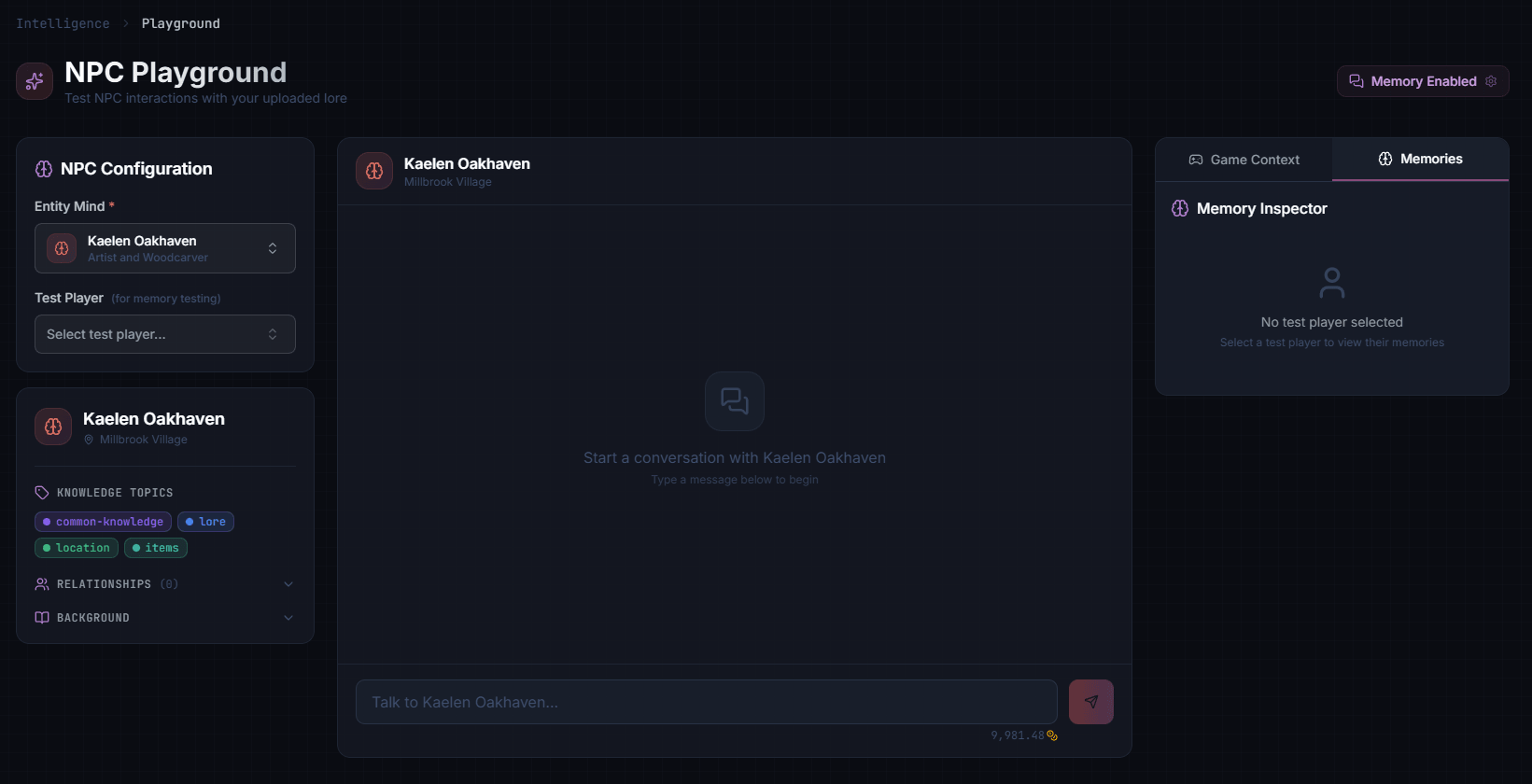
Basic Testing
Selecting an Entity Mind
- Choose an Entity Mind from the dropdown
- Type a message in the input field
- Click Send or press Enter
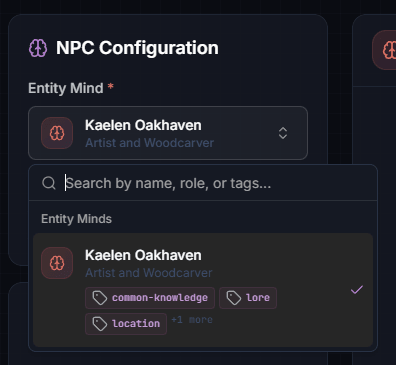
The NPC responds based on its configured personality, speaking style, and available lore.
Conversation History
The Playground maintains conversation history within a session. This lets you test multi-turn conversations:
You: What's your name?
NPC: I'm Garrick, the innkeeper here at the Rusty Anvil.

You: How long have you worked here?
NPC: (Remembers they already introduced themselves as innkeeper)
     Twenty years now. Inherited the place from my father.
Click Clear Conversation to start fresh.
Adding Context
Context helps NPCs understand the situation. Click Show Context to expand the context panel.
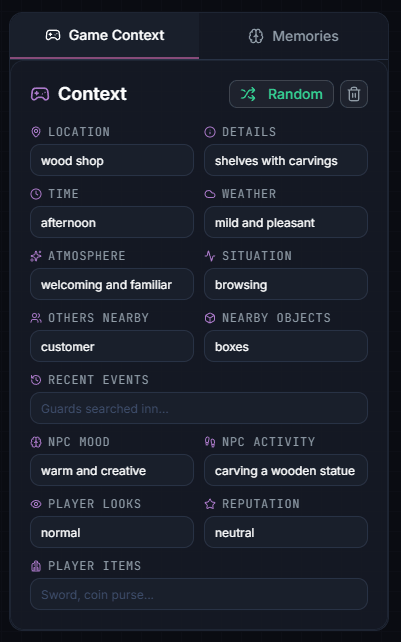
The panel mirrors the API’s context fields. Set any of:
- Location / Location Details — where the conversation is happening
- Time of Day / Weather / Atmosphere — scene conditions and mood
- NPC Mood / Activity — what the NPC is doing and feeling
- Player Appearance / Reputation — what the NPC observes about the player
- Recent Events — world events the NPC would know about
- Custom — game-specific context (quest state, faction standing, …)
What each field does — with examples and size limits — is covered in Runtime Context.
Testing Long-Term Memory
Memory lets NPCs remember players across conversations — Long-Term Memory explains how it works. To test it here:
Enable Memory
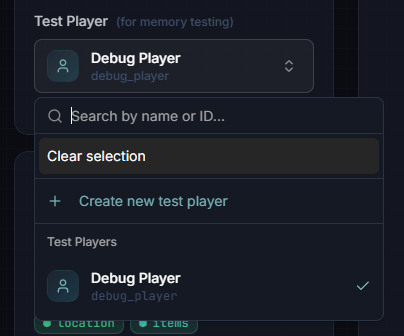
- In the Playground, toggle Enable Memory
- Enter a Test Player ID (e.g., “test_player_001”)
First Conversation
Tell the NPC something memorable:
You: My name is Alex. I'm searching for my lost sister.
NPC: A missing sister? That's terrible, Alex. What does she look like?
Test Recall
Click Clear Conversation (this clears session history, not memory).
Then start a new conversation:
You: Do you remember me?
NPC: Of course, Alex! Any luck finding your sister?
The NPC retrieved stored memories about Alex and the search.
Viewing Stored Memories
Click View Memories to see what the NPC has stored about this player:
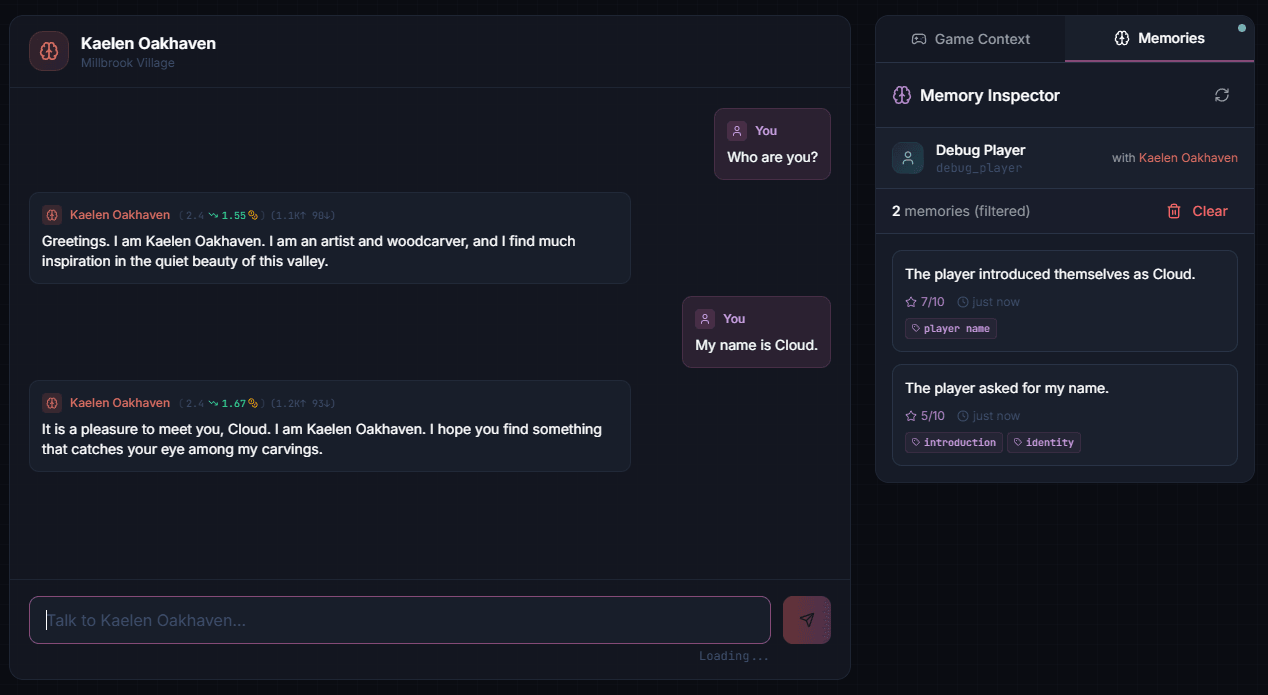
Stored memories for test_player_001:
- Player's name is Alex
- Player is searching for their lost sister
- Player asked about strangers in town
Iterating on Entity Minds
The Playground is perfect for refining NPC personalities.
Testing Personality Changes
- Talk to your NPC, note issues
- Open Entity Minds in another tab
- Adjust personality, hints, or restrictions
- Return to Playground and test again
Example iteration:
Problem: NPC is too formal
Personality before: "Professional innkeeper who runs a clean establishment."
Personality after: "Friendly tavern keeper who loves gossip and treats regulars like family."
Testing Knowledge Filtering
If an NPC doesn’t know something they should:
- Check their Knowledge Tags in Entity Minds
- Verify lore documents have matching tags
- Test again in Playground
If an NPC knows too much:
- Remove broad tags, add specific ones
- Test with questions about restricted topics
Testing Response Settings
| Setting | Test By |
|---|---|
| Verbosity | Ask open-ended questions. Terse gives 1-2 sentences, Verbose gives paragraphs. |
| Temperature | Ask the same question multiple times. High temperature = more variation. |
Tips for Effective Testing
Test Edge Cases
- What if the player is rude?
- What if they ask about something the NPC shouldn’t know?
- What if they try to break character?
Test Consistency
Ask similar questions in different ways:
"What's your job?"
"What do you do here?"
"Are you the innkeeper?"
The NPC should respond consistently.
Test Context Awareness
Change context and ask the same question:
Context: morning, peaceful
"How's business?"
→ "Quiet morning so far. Gets busier around lunch."

Context: evening, festive
"How's business?"
→ "Packed house tonight! Festival brings everyone out."
Save Good Prompts
When you find questions that reveal personality well, save them for future testing:
- “What’s the most interesting thing that happened today?”
- “What do you think about [major NPC]?”
- “Can you keep a secret?”
Troubleshooting
NPC gives generic responses
- Cause: Too few lore documents or wrong tags
- Fix: Add relevant lore, check tag assignments
NPC doesn’t remember
- Cause: Memory not enabled or different player IDs
- Fix: Toggle memory on, use consistent player ID
Responses are too long/short
- Cause: Verbosity setting mismatch
- Fix: Adjust in Entity Mind settings
NPC knows things it shouldn’t
- Cause: Knowledge tags too broad
- Fix: Use more specific tags, add restrictions
Next Steps
- Entity Minds - Refine NPC personalities
- Documents - Add world knowledge
- Runtime Context - Every context field in depth
- Long-Term Memory - How memory works
- Unity SDK - Test in your actual game